Sunday, June 26, 2022

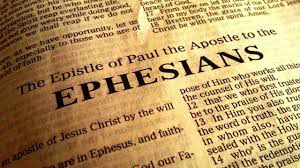
PAUL'S PRAYER FOR THE SAINTS: EPHESIANS 1:15-23


Giving Thanks

1:15-16a


Verses 15 through 23 are a prayer of Paul for the Ephesians. It begins with Paul telling the Ephesians that he continually gives thanks for them because he has heard about their faith in Jesus and their love for the saints, their fellow believers. Although he had been away from them for about 4 years, and was now in prison in Rome, word had gotten back to him about the Ephesian church. 


These two things, faith in the Lord Jesus and love for the saints, are marks of true believers.  Notice that Paul referred to the savior as the “Lord Jesus”. Jesus is our savior, but also our Lord, or master. We believe in him, but we also submit to him. We obey him and we honor him. You cannot say you love Jesus and believe in him as savior, but not as Lord to be obeyed. John wrote: “And by this we know that we have come to know him, if we keep his commandments. Whoever says ‘I know him’ but does not keep his commandments is a liar and the truth is not in him, but whoever keeps his word [obeys him], in him truly the love of God is perfected. By this we may know that we are in him: whoever says he abides in him ought to walk in the same way he [Jesus] walked.”  (1 John 2:3-4) 


This seems to be difficult for many. Human nature is such that we like to be with people like us. My mother used to say “birds of a feather flock together”. It is more difficult for us to accept and love those different from us in social stature, income, and appearance. People also used say they loved someone “in the Lord”, which apparently meant they really did not like them or want to fellowship with them, but they had what John MacArthur called a “spiritualized kind of love”. 


That, however, is not authentic Christian love for Christian brothers and sisters. Again quoting MacArthur, “true spiritual love is defined as an attitude of selfless sacrifice that results in generous acts of kindness done to others.” John wrote: “we ought to lay down our lives for the brothers”. (1 John 3:16-18) Paul also wrote a whole chapter, 1 Corinthians 13, describing the traits of Christian love. Jesus modeled love for the brothers for his disciples. 


Jesus washed the feet of his disciples at dinner. (John 13:1-17) This was a job normally done by servants, as it was a nasty job. The feet of these men, who walked on dirt roads in sandals, were filthy. None of the disciples volunteered to wash Jesus’ feet, much less those of the other disciples. Jesus said it was an example; we should do it for each other since he did it to his disciples. 


The heart of every pastor and elder is gladdened when they see believers, especially believers in the church they are connected with, demonstrating their faith in Christ and their love for each other. It shows that they are genuinely converted and that they are growing, maturing, in their faith. 


In contrast, believers who live contrary to faith and love discourage their elders because they seem to either be non-growing believers or even non-believers. That would mean the work of the pastor or elder (or missionary) has not been productive. The Bible often uses the term “in vain” for this idea. 


For example, Paul encouraged the believers in Philippi to refrain from grumbling and to continue in the faith so he would not consider his work among them to be in vain. (Philippians 2:14-16)


The Prayer

1:16b-23


Paul went on to pray for the Ephesian believers. He prayed for several things and mentioned several theological truths. 


First, Paul prayed that God would give them a spirit of wisdom and of revelation in the knowledge of him. (17) “Revelation” means God’s imparting knowledge to us. “Wisdom” refers to our ability to use that knowledge.


When Paul referred to the spirit of wisdom, Paul was not asking for the Ephesians to be given the Holy Spirit, the third person of the Trinity. As believers, they already have the Holy Spirit, as Paul stated in verse 13-14.


Rather, Paul was asking God to increase their wisdom and knowledge to understand God more. Jesus said “And this is eternal life, that they know you, the only true God, and Jesus Christ whom you have sent”. (John 17:3)


Knowing God includes knowing about him, but is not limited to that. Yes, we study the Bible to learn about God, his wonderful attributes, what he has done in the past, and what his purpose is. But, we come to know God more when we apply what we know as we talk to God in prayer, worship him, and seek his glory through our lives. 


The most obvious comparison is to know your spouse. On the day you marry, you know many things about them. But, as you live together for years, observing them, doing things with them, and talking to them, you come to know them more and to have a deeper relationship with them. 


The more time you spend with someone, the more you know them.

The same is true for knowing God. 


Paul also wanted them to know and understand what God has done for them. He wanted them to more fully understand the the inheritance they have, their eternal life, so that they will know the hope God has called us to. He called this inheritance rich and glorious. (18) 


Many Christians think about their salvation more in terms of not going to Hell than they do of their union with Christ or knowing God the Father. When they think of heaven, if they do, they think of it in earthly terms, wondering if they will be able to play golf all day, or will they live in a glorious mansion like rich people on earth. 


They do not think about living for eternity in the presence of the Lord or living with fellow believers in relationships that are not marred by sin. Those are the things that give up our hope!


Paul also wanted the Ephesians to grow in understanding of God’s immeasurably great power toward believers. (19) He wrote that God’s great power has been displayed in the present exalted status of Christ.

It was displayed 3 ways:

1. in Christ’s resurrection

2. In Christ’s ascension and enthronement

3. In Christ’s headship over the church


This power helps us overcome the world, our own flesh, and the devil.

Christ is sovereign over the world that is in opposition to him. 


Christ’s power helps us overcome our own flesh (sin nature) as he makes us a new creation transforms us by renewing our minds. (2 Corinthians 5:17; Romans 12:2)


Christ is sovereign over the devil and helps us resist and defeat him. (James 4:7)


All of the displays of power in Christ were given for his glory, but also for the benefit of the church, his body.


Paul ended his prayer with a tribute to the Father and the Son. The Father raised the Son, who had died for our sins, and seated him in the place of honor at his right hand in heaven. He made the Son far above all others who claimed rule, authority, power or dominion.


The Father gave the Son a name above every other name in this age and in the age to come. I believe that name is “Lord”. Jesus is “Lord of All”. The Father also put all things under the feet of the Son. (22) These are all ways of saying that the Father exalted the Son above every created being. He highly exalted him. He is above, and has authority over, men and women, angels, demons, and even Satan. 


Paul gave much the same description in Philippians 2. He said the Father highly exalted the Son and gave him a name above every other name. He also gave us the picture of the authority of the Son, saying that every knee should bow before him and every tongue confess that Jesus is Lord. (Philippians 2:9-11)


Not only did the Father give the Son authority over all things, he did so for our benefit. He gave the Son, as head over all things, to the church. He is the head of the church and the church is his body. And, he has chosen the church to display Christ’s incomparable glory and majesty and so be the fullness of Christ.


Saturday, June 25, 2022

“Man is never sufficiently touched and affected by the awareness of his lowly state until he has compared himself with God’s majesty.”—John Calvin

Sunday, June 19, 2022

OUR INHERITANCE IN CHRIST - EPHESIANS 1:11-14


Inheritance

1:11-14


The next spiritual blessing we receive in Christ is an inheritance.


We know from the Old Testament that God chose a people for his inheritance. Israel was his portion, or inheritance. Deuteronomy 4:20 says “But the LORD has taken you and brought you out of the iron furnace, out of Egypt, to be a people of his own inheritance, as you are this day.” Out of all the nations on the earth, the Lord chose Israel to be his people, and so they were his portion on the earth. 


God then gave Israel an inheritance, the land of Canaan. (Deuteronomy 4:28) Then, the land was divided by tribes and then by clans or families. The plot of land allotted to you was your inheritance. It could not be permanently taken away from you. So, an Israelite father could tell his child, someday this land will be yours as your inheritance. You do not own it today, but in the future you will and no one can take it from you. 


In verse 11, then, Paul presents the church as God’s chosen people. He says we, meaning believers, have obtained an inheritance. (ESV) The NIV captures the thought by saying “in him we were also chosen”, but it does not specifically refer to an inheritance, as does the ESV, NASB, and KJV. But, the inheritance concept ties into verse 14, which is the conclusion of this thought. 


So, when we come to Christ, and are “in Christ”, we receive an inheritance. It is our place in the kingdom of God. (Acts 20:32) And it is our permanent place in heaven and then in the New Earth. In a sense, you have a place reserved for you in eternity. Jesus alluded to this in John 14:2-3. He said “In my Father’s house are many rooms. If it were not so, would I have told you that I go to prepare a place for you? And if I go and prepare a place for you, I will come again and will take you to myself, the where I am you may be also.” 


The Book of Revelation describes the ultimate fulfillment of our promise of inheritance as God makes everything new and there is a beautiful new Jerusalem that comes down from heaven. It has the river of the water of life running down the middle of it, with the trees of life growing on either side. The throne of God and the Lamb are also in it. (Revelation 21-22)


This is predestined by God, who works all things according to the counsel of his will. If God predestines it, it will happen. 


Isaiah 46:9-11 says “I am God, and there is none like me, declaring the end from the beginning and from ancient times things not yet done, saying ‘my counsel shall stand and I will accomplish all my purpose…I have spoken and I will bring it to pass; I have purposed and I will do it”. 


The end, or goal, of these things is the praise of God’s glory. (12) So, it is really not all about us. It is about him. 


This inheritance is our hope. “Hope” in the Bible does not mean “wish”, rather it is a certain thing that gives us assurance. Our eternal salvation and place in eternity with the Lord is our certain hope. There are denominations that believe and teach that you may lose your salvation. But, here, Paul writes that we we came to faith in Christ, we received the Holy Spirit and were sealed with him. He is actually the guarantee of our inheritance until we receive it. He is God dwelling with us as believers until we live in the presence of God in eternity. (13-14) Calvin wrote: The whole comes to this, that the Holy Spirit is the bond by which Christ effectually binds us to himself.” (Institutes, Book 3, Chapter 1, section 1) Again, all of this is to the praise of his glory.


Peter also voices this truth of inheritance. 1 Peter 1:3-5 says “Blessed be the God and Father of our Lord Jesus Christ! According to his great mercy, he has caused us to be born again to a living hope through the resurrection of Jesus Christ from the dead, to an inheritance that is imperishable, undefiled, and unfading, kept in heaven for you, who by God’s power are being guarded through faith for a salvation read to be revealed in the last time”. 


There are denominations that believe and teach that you may lose your salvation. But, here, Paul writes that when we came to faith in Christ, we received the Holy Spirit and were sealed with him. He is actually the guarantee of our inheritance until we receive it. He is God dwelling with us as believers until we live in the presence of God in eternity. (13-14) 


Calvin wrote: The whole comes to this, that the Holy Spirit is the bond by which Christ effectually binds us to himself.” (Institutes, Book 3, Chapter 1, section 1)


Again, all of this is to the praise of God’s glory.


So, the idea of a sure inheritance leads us to the doctrine of the perseverance of the saints, which might better be stated as God’s preservation of the saints. Baptists have called this “once saved\always saved”. Those who have been chosen by God and redeemed by Christ are eternally saved. You do not lose your salvation. God holds it, not you.


The fact that God says we have an inheritance and that he predestined it gives us assurance. 


The Baptist Faith and Message, section V says:

All true believers endure to the end. Those whom God has accepted in Christ, and sanctified by His Spirit, will never fall away from the state of grace, but shall persevere to the end. Believers may fall into sin through neglect and temptation, whereby they grieve the Spirit, impair their graces and comforts, and bring reproach on the cause of Christ and temporal judgments on themselves; yet they shall be kept by the power of God through faith unto salvation.


The 1689 London Baptist Confession of Faith states: 


Those whom God has accepted in the beloved, effectually called and sanctified by his Spirit, and given the precious faith of his elect unto, can neither totally nor finally fall from the state of grace, but shall certainly persevere therein to the end, and be eternally saved,


Article III, Chapter 8 of the Westminster Confession says:


The doctrine of this high mystery of predestination is to be handled with special prudence and care, that men attending to the will of God revealed in His Word, and yielding obedience thereunto, may, from the certainty of their effectual vocation, be assured of their eternal election. So shall this doctrine afford matter of praise, reverence, and admiration of God; and of humility, diligence, and abundant consolation to all that sincerely obey the gospel.


Certainly there are false confessions. There are people who “walk the aisle” because of peer or family pressure or to look good. Those folks will likely fall away, or realize later in life that they are not saved and will come to genuine faith in Christ.


Certainly, there are also those who fall into sin for a period of time. But the true believer will not persist in sin, but will come to repentance and return to a life of commitment to Christ. 


But, to believe that we lose our salvation is to deny the sufficiency of Christ’s death on the cross for us. Christ died for all of our sins, past and future. 


“Christ, having been offered once to bear the sins of many will appear a second time, not to deal with sin but to save those who are eagerly waiting for him.” (Hebrews 9:28)


“For by a single offering he has perfected for all time those who are being sanctified.” (Hebrews 10:14)


“It is finished.” (John 19:30) Jesus declared that all the work that needed to be done to pay for our sins had been completed. 


So, why do Christians confess their sins? Christians sin. (1 John 1:8) We fight sin to become more like Christ as we grow in him.


We have fellowship with God as believers, but that fellowship is damaged when we sin. (1 John 1:6) We confess, God forgives, and fellowship is restored\maintained. (1 John 1:9)


I pray that you will believe in the Lord Jesus Christ. And that you will have assurance of your salvation and your inheritance in Christ that brings you peace and joy. 


May you sing with the hymn writer, Fanny Crosby:


Blessed assurance, Jesus is mine!

Oh, what a foretaste of glory divine!

Heir of salvation, purchase of God

Born of his Spirit, washed in His blood.


Friday, June 17, 2022

Children of God & Fellow Heirs With Christ

 "...you have received the Spirit of adoption as sons, by whom we cry 'Abba Father'! The Spirit himself bears witness with our spirit that we are children of God, and if children, then heirs - heirs of God and fellow heirs with Christ..." 

Romans 8:15-17

Truth In A Time of Emotions

 "A great thing to remember is that though our feelings come and go, God's love for us does not." 

C. S. Lewis


Sunday, June 12, 2022

BLESSINGS IN CHRIST: EPHESIANS 1 PART 1


EPHESIANS BIBLE STUDY


The Greeting

1:1-2


This epistle is a letter from the imprisoned Paul to the church in Ephesus. It was an important city, the Roman capitol of Asia. There are many ruins visible which show the city had beautiful temples and active commerce. 


The Ephesians first heard the gospel from Apollos. He began preaching after hearing the gospel according to John the Baptist. But Priscilla and Aguila explained “the way of God more accurately” to him. (Acts 18:24-26)


Paul then came to Ephesus and met some disciples that had heard the message of John the Baptist. He explained Jesus to them and baptized them. They received the Holy Spirit, spoke in tongues, and prophesied. (Acts 19:1-7) He then spoke in the synagogue until he experienced opposition. He took the converts with him to a public hall, where he continued to preach for two years. (Acts 19:8-10)


Ultimately, a guild of silversmiths rioted because Paul was persuading many people to leave the worship of Artemis and come to Christ. Paul left Ephesus and returned to Macedonia with Jerusalem as his ultimate destination. (Acts 20:1) On his way to Jerusalem, Paul called the Ephesian elders to meet him at Miletus, where he instructed them and prayed. Their sorrowful farewell to Paul showed that they loved him and knew they would not see him again. (Acts 20:37-38) 


Indeed Paul was arrested in Jerusalem and was eventually in confinement in Rome, where he wrote this letter in A.D. 62. 


Paul identified himself as an apostle to establish his authority to instruct them. That would be especially relevant to believers who had not met him personally. 


The Blessings

1:3-10


This section is actually one long sentence in the original Greek. It is a prayer of praise. It also contains many theological truths.

When Paul says “blessed be…God”, it is to praise God. (3) It is not that we add anything to God, for there is nothing to add. (The doctrine of Aesity.) The basis for this prayer, or blessing, is that God has blessed us. In this case, blessing means the benefits God bestows upon us. 


God is the source of all blessings. James 1:17 says “Every good gift and every perfect gift is from above, coming down from the Father of lights with whom there is no variation or shadow due to change”. 


God gives these blessings “in Christ”. (3) When we come to Christ in faith and are saved, we are “in Christ”. This is sometimes referred to as our “union with Christ”. 


So, these blessings from God come only to believers, those who are in Christ. They are already given to us. Paul writes that God “has blessed us” (past tense). 


The blessings are “spiritual blessings” in that they are from the Holy Spirit. The Greek word translated “spiritual” is “pneumatikos”, which always refers to the work of the Holy Spirit in the New Testament. It does not refer to immaterial blessings as opposed to spiritual blessings. Spiritual here refers to the source of the blessing rather than the type of blessing. 


So, we see all three members of the Trinity at work. The Father gives the blessings in Christ through the Holy Spirit. 


These blessings are in the heavenly places, the supernatural realm of God. Believers live on the earth, but are citizens of heaven. Philippians 3:20 says “But our citizenship is in heaven and from it we await a Savior, the Lord Jesus Christ, who will transform our lowly body to be like his glorious body by the power that enables him even to subject all things to himself.”

So, these blessings come from God, who is in heaven, to us as citizens of heaven.


The first blessing is choosing, or “election”. God chose us, believers, in Christ before the foundation of the world. (4) The Greek word translated here as “chose” in its various forms (noun, verb, adjective) is also translated at times as “elect”. Believers are the chosen or the elect. 


God did his choosing before the foundation of the world. (4) This was not a plan B for God after Israel failed, but was the plan A all of the time. And this should give us a sense of security and assurance of salvation. If God chose you before the foundation of the world, and later called you to faith in Christ, he is not going to let you go, to lose your salvation. 


There is a purpose in God’s election beyond giving us eternal life. We are to be holy and blameless before him. There are two parts to this. First, God makes us blameless in his sight by imputing the righteousness of Christ to us when we come to him in faith. God himself declares us to be righteous. 


Romans 5:1 says we have been justified by faith. The Christian Standard Bible makes plain that God does this, saying “we have been declared righteous by faith”.  


The second part of this is that we are to live holy lives now that we are reconciled to God in Christ. Holy living testifies to the holiness of God. 1 Peter 1:14-16 says “As obedient children, do not be conformed to the passions of your former ignorance, but as he who called you is holy, you also be holy in all your conduct, since it is written, ‘You shall be holy, for I am holy”. 


Sinful lives profane his name among those who are not saved.


The next blessing is predestination to adoption. God predestined us for adoption as sons through Jesus Christ. This doctrine of adoption says that we become part of God’s family. We become sons, those with special privileges. This does not mean that we are equal to Jesus, but that the blessing of our union with him includes being treated as family.


The most well known verse about this may be John 1:12, that says “But to all who did receive him, who believed in his name, he gave the right to become children of God, who were born, not of blood, nor of the will of the flesh nor of the will of man, but of God.” 


Romans 8:29 says “For those whom he  foreknew he also predestined to be conformed to the image of his Son in order that he might be the firstborn among man brothers.”


This adoption was according to God’s will and for the praise of his glorious grace, with which he blessed us in Christ. (6) So, it was God’s plan before he created the earth that those chosen would be saved to live holy lives, giving Jesus would have a large family of those who believe in and live for him to the glory of God.. This adoption was according to God’s will and for the praise of his glorious grace, with which he blessed us in Christ.


All of these things were done according to the purpose of God’s will. God’s purpose in this was to glorify himself, to create praise for his grace in saving those who believe in him, even after mankind had rejected him and fallen into sin.


Paul next expounded upon the accomplishments of the grace he blesses us with in Christ (“the Beloved”). He redeemed us through the blood of Christ, he forgave our trespasses, and he revealed the mystery of his will. 


To redeem is to pay a price to obtain the release of someone from captivity. Sometimes that price is called a ransom. In the days of slavery, a slave could be freed is someone paid a price for him. That analogy is used for us, as Christ paid the price to release us from slavery to sin. 


The price Christ paid was his blood, meaning his death. That is why there are so many hymns and songs that talk about blood. The cost of sin is death, and Christ paid it for us. (Romans 3:23; 1 Peter 1:18-19) 


Redemption also resulted in the forgiveness of our sins, here called trespasses. Hebrews 9:22 says “…without the shedding of blood there is no forgiveness of sins. 


Our redemption and forgiveness came to us out of God’s grace, not our merit. He lavished his grace upon us; he did not hold back. (8)


God also revealed to us the mystery of his purpose. In the New Testament, a mystery is a truth which has not yet been revealed. All through Old Testament times, this mystery was hinted at but not fully revealed. Then, at the coming of Christ, God revealed his plan to unite all things in Christ, both things in heaven and on earth. (10) 


In the fulness of time, God will bring everything under Christ. He will rule and everyone will abide by his rule. Everything will be made new under his rule, better than it has ever been since Adam sinned. And we, the children of God, will enjoy it forever. 

Monday, June 06, 2022

Gentleness

 Here is a good article on gentleness in ministry by Michael J. Kruger.